Side Effects of Appendectomy
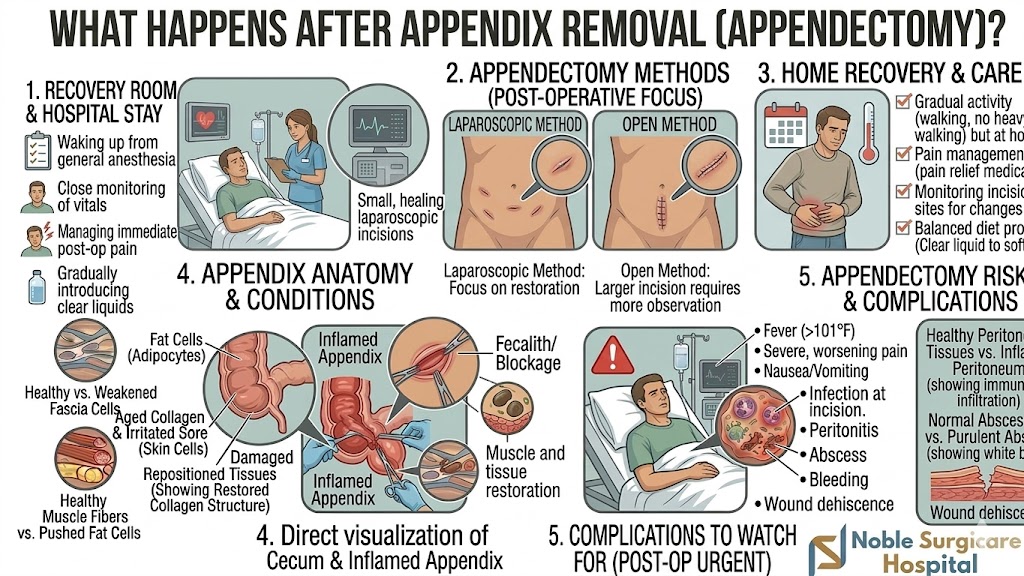
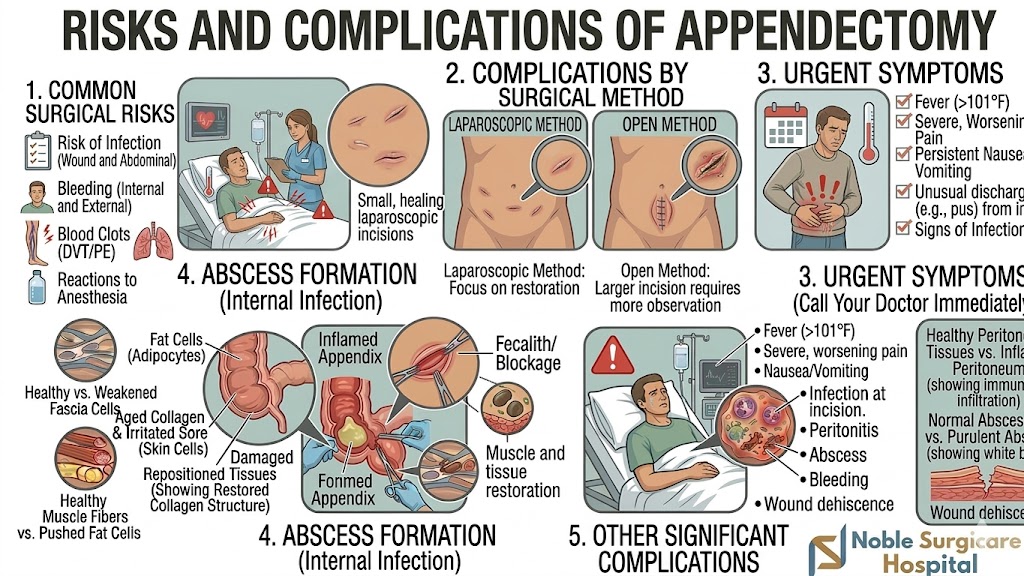
After appendectomy, you may experience some side effects as your body heals. These are usually temporary and resolve on their own or with mild treatment.
Common post-surgery side effects include:
- Nausea or vomiting: Often caused by the anaesthesia or pain medication used during the appendectomy procedure.
- Constipation: It may occur due to decreased mobility or painkillers. A high-fibre diet and fluids can help.
- Gas pain or shoulder pain: A common result of laparoscopic appendectomy, where gas is used to inflate the abdomen.
- Abdominal bloating: Your abdomen may feel swollen or tender for a few days post-surgery.
- Fatigue or weakness: It is normal to feel tired while recovering from an acute appendectomy.
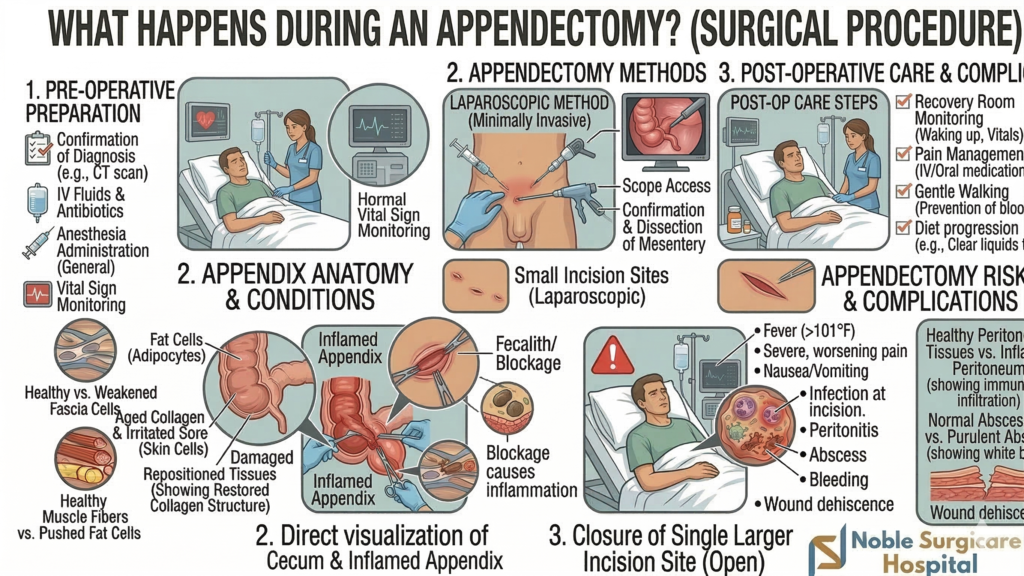
- Mild incision pain or discomfort: Especially at the laparoscopic appendectomy incision sites or larger incision in case of open surgery.
Benefits of Appendix Removal Surgery (Appendectomy)
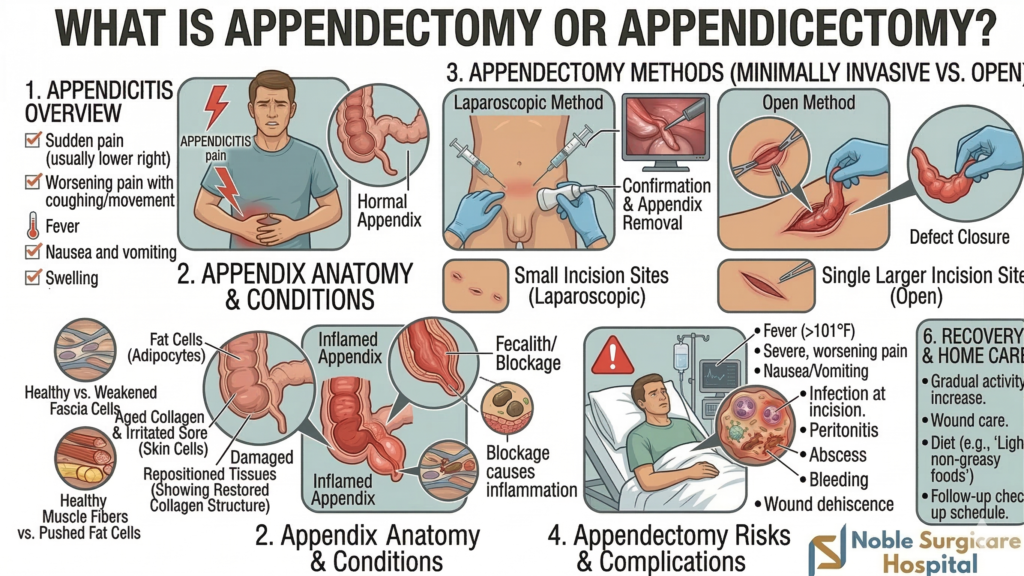
Among the two main types of appendectomy, laparoscopic and open surgery, most patients and surgeons prefer the laparoscopic appendectomy due to its many advantages. Here are the key benefits of appendix removal:
- Immediate Relief from Symptoms – Surgery removes the inflamed appendix, providing instant relief from the pain and discomfort caused by appendicitis.
- Prevents Life-Threatening Complications – Timely appendix removal prevents the risk of rupture, peritonitis (infection of the abdominal lining), and abscess formation.
- Reduced Risk of Infection – Smaller incisions lower the chance of wound infections compared to traditional surgery.
- Faster Recovery Time – Most patients undergoing laparoscopic appendectomy are discharged on the same day and resume normal activities sooner.
- Less Pain After Surgery – Since the incisions are small, there is minimal post-operative pain, making recovery more comfortable.
- Minimal Scarring – The scars from a laparoscopic appendectomy are smaller and less noticeable than those from an open procedure.
- Lower Blood Loss – The precision and smaller incisions in laparoscopic appendectomy reduce the risk of bleeding during surgery.
- Fewer Restrictions Post-Surgery – Patients can return to light physical activities within a few days under the supervision of their doctor.
- Safe Use of Anaesthesia – The anaesthesia for appendectomy is safe and well-managed, especially in planned, non-emergency surgeries.
- Permanent Solution – Once the appendix is removed, there is no risk of developing appendicitis again, eliminating the need for future acute appendicitis treatment.
Dos and Don’ts After Appendectomy
Following proper post-surgery instructions can help reduce the appendectomy recovery time and avoid potential appendectomy risks like infection or complications. Here are some important dos and don’ts to keep in mind after appendix removal surgery:
Dos after Appendectomy:
- Keep Your Incisions Clean and Dry
Proper care of your laparoscopic appendectomy incision sites or open surgery wound helps prevent infection. Follow your surgeon’s advice on how to clean the area.
- Take Prescribed Medications Only
Always follow your appendectomy doctor’s instructions when taking painkillers or antibiotics. Only use medicines prescribed for your recovery.
After the appendectomy procedure, your digestion may be slow. Begin with soft or bland foods and gradually return to your normal diet as advised.
Gentle movement, such as walking, improves blood circulation, reduces the risk of blood clots, and helps your bowels return to normal. Do not remain completely still for long periods.
Your body needs time to heal. Listen to your body and rest as needed during the early stages of acute appendectomy recovery.
- Follow Up with Your Surgeon
Keep all follow-up appointments to monitor your healing and manage any issues early.
Don’ts After Appendectomy:
- Do not Strain Your Abdomen
Avoid lifting heavy objects, climbing stairs too often, or engaging in intense activity that could stress your abdominal muscles, especially after open appendectomy.
- Do not Bathe or Swim Too Soon
Until your stitches dissolve or are removed, avoid swimming or taking baths. Stick to sponge baths or quick showers if cleared by your doctor.
- Do not Skip Your Medications
Skipping antibiotics or pain relief medications can slow down healing or increase the risk of infection.
- Do not Eat Heavy or Spicy Foods Immediately
Let your digestive system ease back into its normal routine. Eating heavy or greasy food too soon may lead to nausea or bloating.
- Do not Ignore Warning Signs
Contact your doctor immediately if you experience:
- Fever or chills
- Redness, swelling, or pus at the incision site
- Severe pain not relieved by medication
- Vomiting or constipation lasting more than a couple of days